
Marc Gray is the Founder and Director of Education for Odyssey College Prep and the CEO of Powerful Prep. Marc uses advanced aptitude testing to simplify the college admissions process for students and parents. He also guides students to create targeted passion projects to differentiate their college applications. He currently serves as the Highlands Company’s ambassador to CounselMore. In that role, he enjoys helping other college counselors use aptitude testing to enhance their business. As an active member of CounselMore’s community, Marc hosts CounselMore’s Mentorship Community Roundtable Discussion, where college counselors can learn from one another and instruct each other in best practices.
Early Decision vs Early Action Series
College admissions continue to grow more and more competitive. As such, many parents, students, guidance counselors, and educational consultants on Early Decision. Early decision, to grossly oversimplify, is an application process where a student applies to a college early in the admissions cycle.
Like anything in college admissions tactics, it’s complicated, with no small amount of nuance. Thus, we believe it deserves its own series.
Ed1 vs Ed2: What’s the difference?
As if Early Decision wasn’t nuanced enough, there are two of them: ED1 and ED2. In the next post, we’ll delve into the differences between the two: from their application deadlines to the obligations they place on the parents and students. As such, we won’t cover the myriad complexities of early action in this post. That will be reserved for our next one.
Early Action vs Early Decision - What's the difference?
Early Action is a fairly straightforward process. It offers a tiny portion of the benefits ED does without the pressure of a binding decision. However, it has its own set of challenges that we’ll discuss in a later post.
How College Counselors and IECs Use Early Action and Early Decision
As a college counselor, you guide the hands that steer the ship. Parents and students will follow your lead. That means you have to be able to navigate the hills and valleys and labyrinthine complexities of ED and EA. Throughout this series, we’ll look at a few case studies to help illustrate how counselors and IECs should advise students when to use these application processes.
Conclusion
Early Action and Early Decision are the two most reliable application formats that are advantageous for students. Keep reading the series to learn how to get the most out of each one. In the meantime, if you’re interested in learning more about college admissions, feel free to join Counselmore’s email list or register for our free monthly mentorship meeting.
Happy Counseling!
-Marc







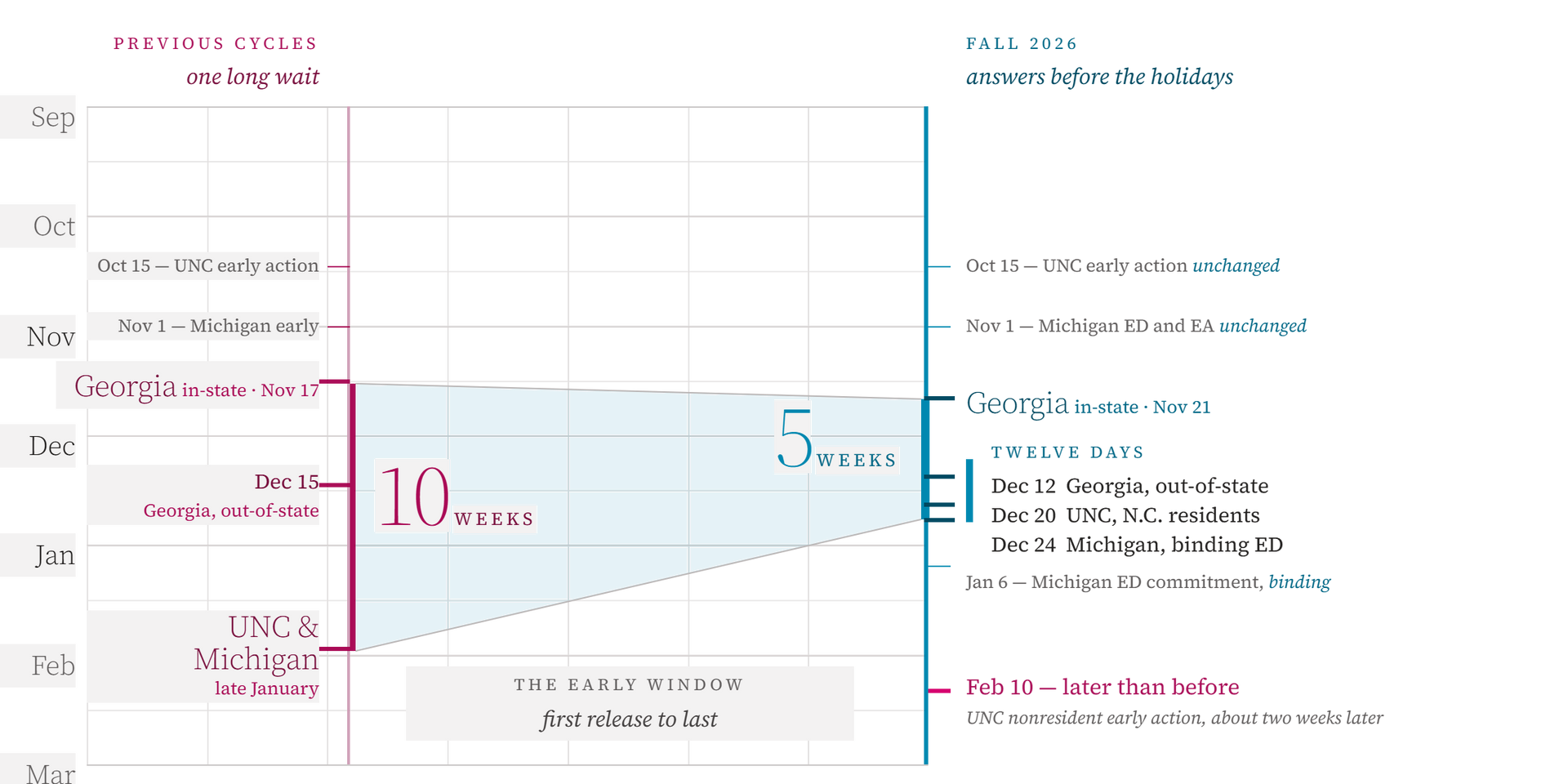
UNC moved up its early decision release, Georgia's early pool hit a record, and Michigan added Early Decision anticipating record demand. What the data actually shows, and what it means for counselor workflow this fall.

UT Austin lists the freshman resume as optional, but its own honors programs — including one that requires it outright — tell a different story. Here's what the university's own pages actually say.
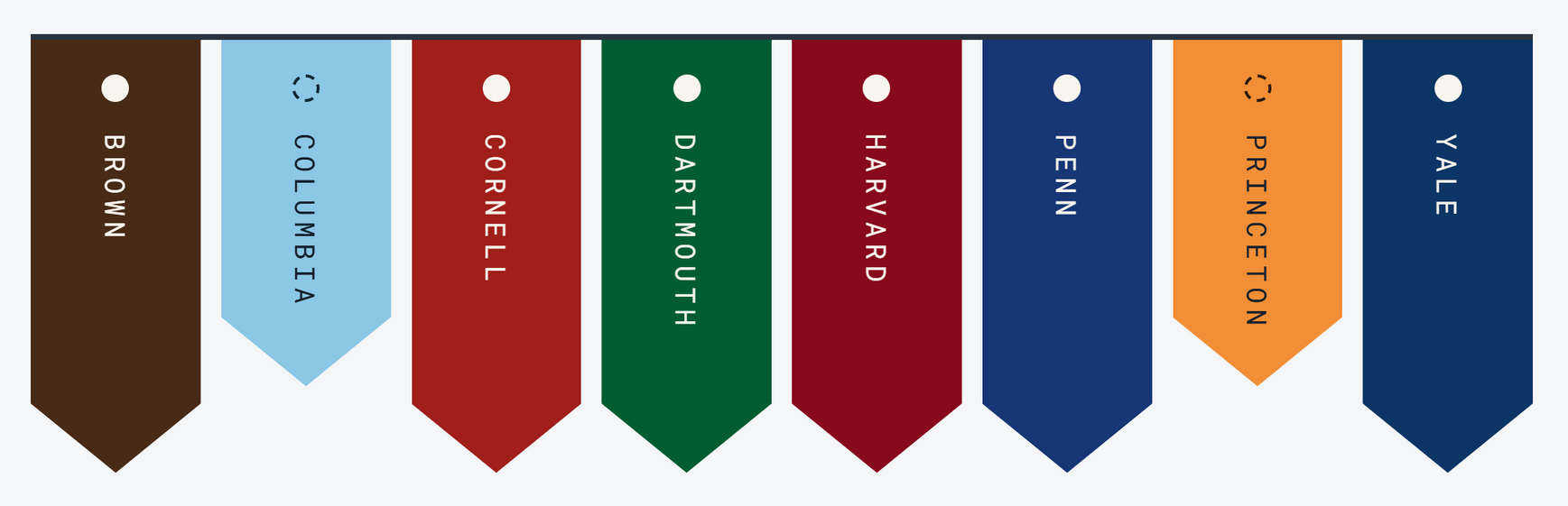
Six of eight Ivy League schools now require SAT/ACT scores, and the other two have already announced when they're joining. Here's the exact status of every school, why it's happening, and how to advise families now.
The internet is losing its mind over a tip for college-bound families: a recent video revealed that students can get colleges to pay for their campus visits.

Many students are looking for research opportunities and ways to volunteer with researchers, but often don’t know where to look for them. In this article, we outline 15 research volunteer opportunities for high school students. These opportunities are all free, and while some have an application process, others are always open to volunteers.
The Concord Review is the most prestigious journal for high school students in the social sciences. As William Fitzsimmons, long-time Dean of Admissions at Harvard College, put it “A simple fact that an essay has been published by The Concord Review is something that’s impressive to the committee, just as the committee can be impressed when a scientist or mathematician does well in an international competition.” The Concord’s Review’s prestige comes from its high level of selectivity (currently less than 5%), focus on quality, and long track record of winners going on to top universities. In 2010, 10% of all students published in the journal had gone to Harvard College . As the Concord Review describes , many authors will attach their Concord Review in their application. Of students who have been published, they have “gone on to Brown (35), University of Chicago (36), Columbia (31), Cornell (21), Dartmouth (24), Harvard (152), Oxford(17), Pennsylvania (30), Princeton (76), Stanford (86), Yale (123).” So, what is the Concord Review and how can you build a paper that is accepted? In this guide, we’re going to go through what the Concord Review is, what it looks for in papers, and what you need to do to stand a chance.

How College Readiness Works in Three Parts — and How CounselMore Supports Each Stage

How Independent Educational Consultants Can Get More Parent Referrals
FAKE COLLEGE WEBSITES: What every College Counselor needs to know

Key Education Impacts of “One Big Beautiful Bill” (& Counselor Talking Points)

FAFSA Opens October 1 — For Real This Time: What College Counselors Should Know for 2026–27

Charting the Future of Educational Consulting with the PIT Crew